Metta, or loving-kindness meditation, is the practice of offering kind wishes to yourself and others. It is an invitation, not a requirement to feel loving or peaceful.
A simple five-step practice
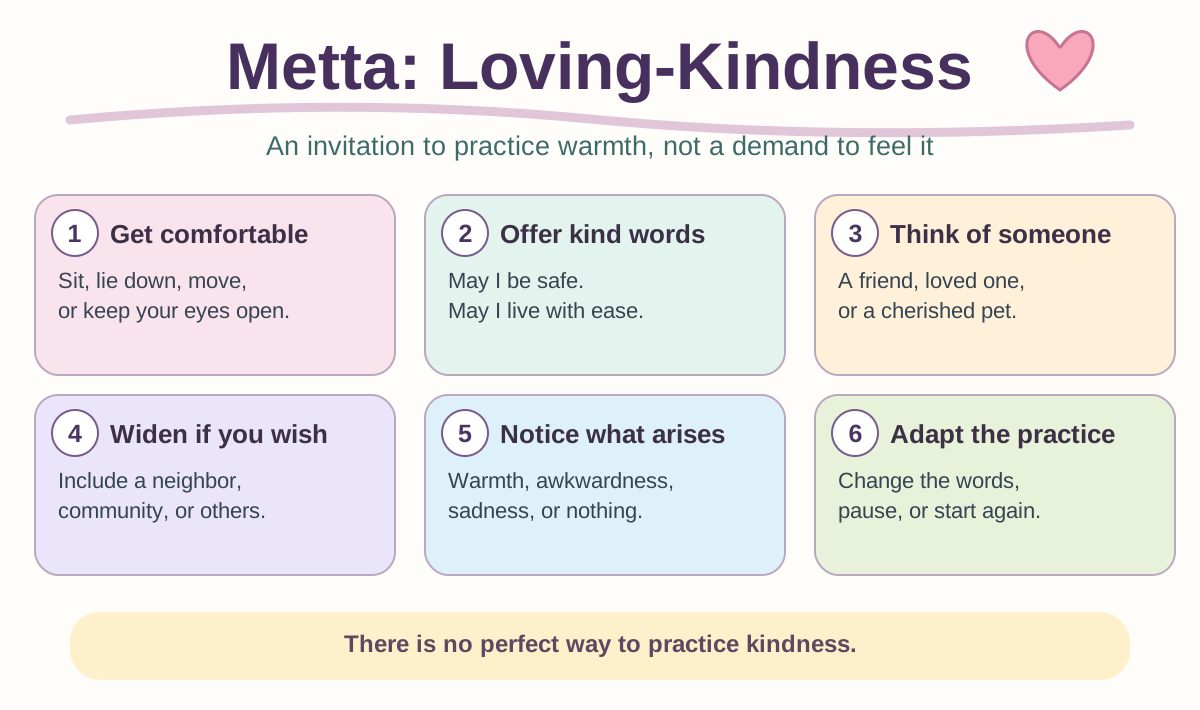
- Get comfortable: Sit, lie down, stand, or move gently. Eyes can stay open. Let your breath be natural.
- Start with yourself: Silently repeat a phrase such as “May I be safe. May I be peaceful. May I be kind to myself. May I live with ease.”
- Think of someone you care about: A person or pet may be easier to begin with. Offer them the same wishes.
- Widen the circle, if you wish: Include an acquaintance or your community. You never have to direct kindness toward someone who harmed you.
- Notice your experience: Warmth, distraction, restlessness, sadness, or nothing in particular are all acceptable.
Make it work for you
- One-minute version: Say one kind phrase while making tea.
- Hands-busy version: Knit, doodle, rock, or take a short walk while repeating a phrase.
- Pet-first version: Offer kind wishes to your pet before offering them to yourself.
- Different wording: Try “May I have support,” “May I meet myself with patience,” or “May today be a little easier.”
- No visualization required: You can simply read the words or listen.
When kindness feels hard
Self-directed kindness can bring up discomfort or self-criticism. You can choose a more believable phrase, begin with someone else, or pause. The goal is not to perform compassion perfectly.
Try it this week
Reflection: What words would I most need to hear when I'm having a difficult day?
Illustrated sketchnote summary
Research and boundaries
Loving-kindness meditation may increase compassion and positive feelings for some people. It is not an established treatment for ADHD executive functioning. Claims that it reliably releases oxytocin or increases prefrontal gray matter are not established.
Related reading: No access and No access.
Flourishing Women LLC · Participant handout · 2026