Savoring means giving pleasant moments a little more attention. You do not need to ignore distress or make yourself happy.
Four ways to practice
- Mindful presence: Notice what is enjoyable right now—perhaps a meal, music, sunlight, or a funny pet.
- Positive anticipation: Look forward to something pleasant, large or small.
- Reminiscing: Revisit an enjoyable memory through a photograph, song, or story.
- Sharing: Tell someone about something good, or remember a positive moment together.
A 30-second savoring exercise
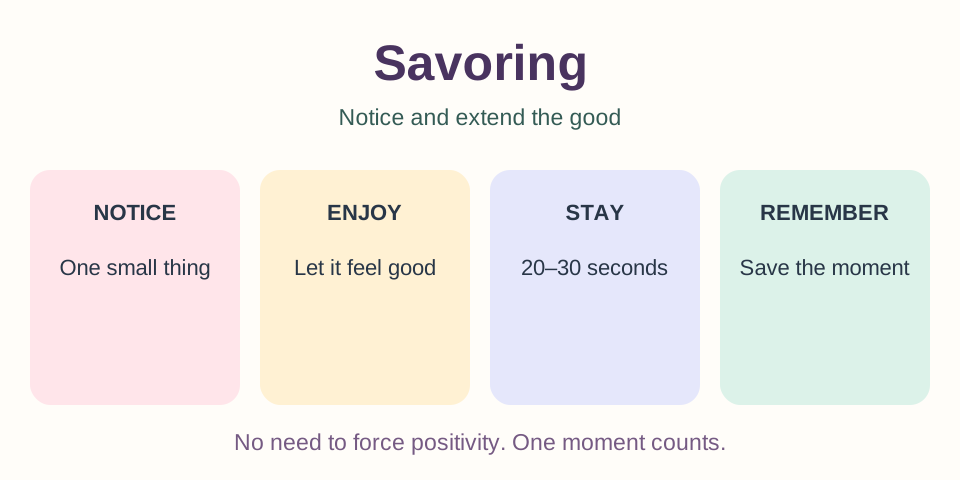
- Notice: Find one pleasant thing. Small things count.
- Allow: Let yourself appreciate it rather than immediately moving on.
- Stay: If comfortable, give the experience 20–30 seconds of attention.
- Absorb: Notice what you feel or think. Visualizing warmth is optional.
- Repeat: Return to the practice when it fits your day. One moment counts.
Ideas you can try
- Enjoy the first few bites of a favorite meal without rushing.
- Pause when a song gives you pleasure.
- Look at a plant, a sunset, or the light through a window.
- Remember a funny or comforting moment.
- Enjoy receiving a compliment without needing to dismiss it.
- Send someone a brief message about something you appreciated.
- Think about a small event you are looking forward to.
If it feels uncomfortable
Enjoyment sometimes brings up self-criticism, guilt, sadness, or discomfort. In self-compassion work this can resemble backdraft. You can name the feeling, choose a different experience, or stop. You do not have to force yourself to feel positive.
Try it this week
Reflection: What is one ordinary moment I might enjoy more fully if I gave it a little attention?
Illustrated sketchnote summary
Research and boundaries
Savoring is associated with positive emotion and well-being. Twenty to thirty seconds and six repetitions per day are optional exercises, not proven neurological thresholds. It has not been shown that such a brief practice reliably rewires the brain or heals old hurts.
Related reading: No access and Module 29: Growing a Positive Brain.
Flourishing Women LLC · Participant handout · 2026